Regional Security
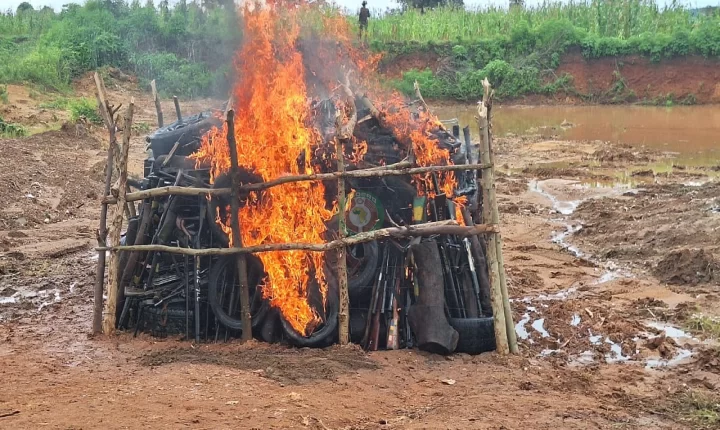
PUBLIC DESTRUCTION OF SMALL ARMS AND LIGHT...more
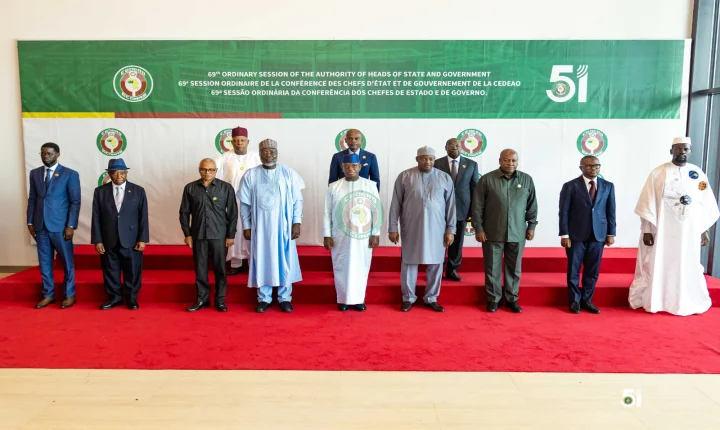
ECOWAS HOLDS SUMMIT ON THE FUTURE OF REGIONAL...more
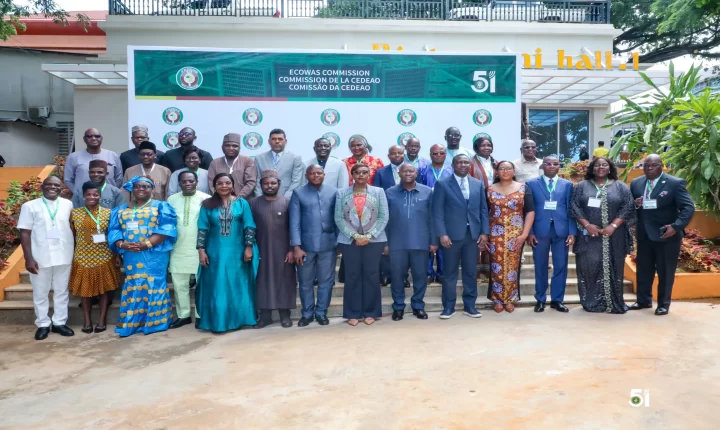
THE 39TH MEETING OF THE ECOWAS ADMINISTRATION...more
ECOWAS COMMISSION CONFERS WITH THE UNITED...more
H.E. DR OMAR ALIEU TOURAY MEETS WITH MEMBERS OF...more
ECOWAS COMMISSION CONFERS WITH THE KINGDOM OF...more
Exclusive Interviews
THE COMMISSIONER POLITICAL AFFAIRS, PEACE AND SECURITY AMB ABDEL FATAU MUSAH - Abuja, 8 March 2024
ECOWAS Declares State Of Emergency Across West African Region
"ECOWAS made mistakes and I must admit it" - Amb. Dr. Abdel-Fatau Musah
DIRECTORATE PEACEKEEPING AND REGIONAL SECURITY
Mandate
The Peacekeeping and Regional Security (DPKRS) was established in compliance with article 16 of the Protocol Relating to the Mechanism for Conflict Prevention, Resolution, Management, Peacekeeping & Security with the mandate to contribute to a peaceful and secure environment that is conducive to a fully integrated and prosperous ECOWAS region. In this regard, the Directorate of Peacekeeping and Regional Security (DPKRS) is mandated to:
- plan, prepare, manage ECOWAS mandated Peace Support Operations;
- promote synergies among security services to fight against security threats, including terrorism, transnational organized crime, illegal activities at the sea;
- facilitate the fight against the proliferation of small arms and light weapons (SALW).
The Directorate plays a central role in enhancing and supporting the broader ECOWAS peace and security architecture. It executes its mandate primarily through coordination of regional efforts to address insecurity.
Structure of DPKRS
The directorate is structured as follows as per the 2018 approved organogram:
Peace Support Operations Division (PSOD)/ESF Core Taskforce Headquarters.
The Peace Support Operations Division (PSOD) was established by Regulation C/REG.11/12/16, amending the Regulation C/REG.20/12/03 of December 2003 which created the Mission Planning and Management Cell (MPMC). The PSOD is a multidimensional and integrated planning element of the ECOWAS Standby Force. The ESF Core Task Force Headquarters the military arm of the ESF. These structures operate respectively at the Strategic and Operational levels to conduct crisis assessments and plan, deploy, coordinate, manage as well as liquidate ECOWAS missions in line with Article 22 of the December 1999 Protocol. These missions include:
- Observation and monitoring.
- Peacekeeping and restoration of peace.
- Humanitarian intervention in support of humanitarian disaster.
- Enforcement of sanctions including embargo.
- Policing activities including the control of fraud and organised crime.
- Peace building, disarmament and demobilisation.
- Preventive deployment.
- Any other operations mandated by ECOWAS Mediation and Security Council (MSC).
Regional Security Division (RSD)
The Regional Security Division (RSD) was established in line with Article 58 of the ECOWAS Revised Treaty and Chapter 10 of the Protocol Relating to the Mechanism for Conflict Prevention, Management, Resolution, Peace Keeping and Regional Security. The Division is charged with the primarily responsibility to assist the Commission formulate policies, facilitate implementation at the Regional and National Levels, represent, oversee and advise on all Regional Security issues.
- The Division intervenes in the following areas:
- Coordination of Security and Intelligence Services
- Counterterrorism and Border Security
- Maritime Security and Safety
- Security Sector Reform and Governance
- Transnational Organised Crime
- Any other task or assignment mandated by ECOWAS Mediation and Security Council (MSC).
The Division also serves as Permanent Secretariat of the West African Police Chiefs Committee (WAPCCO).
Small Arms Division (SAD)
The Small Arms Division (SAD) was established through Regulation C/REG.19/12/03 of December 2003 to support and monitor the implementation of the ECOWAS Moratorium on the Importation, Exportation and Manufacture of Small Arms and Light Weapons (SALW). Following the adoption of the ECOWAS Convention on Small Arms and Light Weapons, Their Ammunition and Other Related Materials in June 2006, which transformed the Moratorium into a legally binding instrument, the Division continued to implement its mandate within the framework of the Convention. The Division serves as the technical arm of the Directorate of Peacekeeping and Regional Security responsible for designing, implementing, managing, and coordinating interventions related to addressing the proliferation of Small Arms and Light Weapons (SALW), weapons and ammunition management, practical disarmament, management of the ECOWAS Exemption Procedure, weapons marking, physical security and stockpile management, counter-improvised explosive devices, and related initiatives.
Core responsibilities of the Division include:
- Coordination of implementation of the ECOWAS Convention on SALW;
- Management of the ECOWAS Arms Transfer Regime – the ECOWAS Exemption Procedure;
- Design, implementation and coordination of activities and initiatives on addressing arms proliferation and associated threats;
- Capacity building/technical support for Member States (through the National Commissions on Small Arms) on the implementation the ECOWAS Convention on Small and Light Weapons;
- Development and promotion of harmonization of regional standards and policy frameworks on addressing arms proliferation and related threats;
- Support to civil society networks to facilitate implementation of certain provisions of the ECOWAS Convention on Small Arms
- Promotion of regional cooperation and information sharing among member states on addressing threats posed by SALW and associated threats;
- Resource mobilization and partnership coordination.
Related Activities
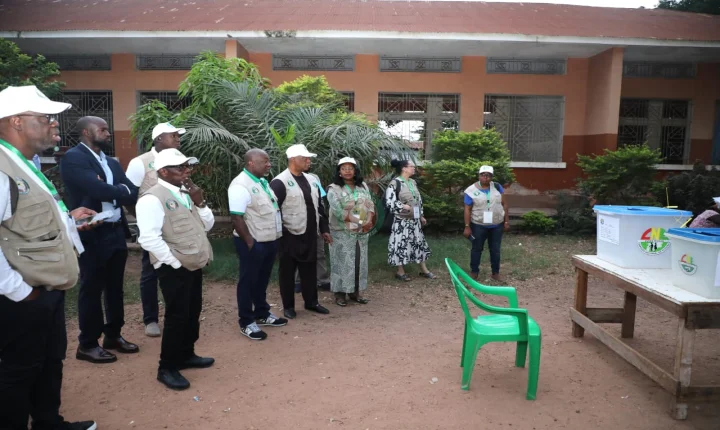
ECOWAS Election Observation Mission observes peaceful, orderly and...more

ECOWAS to hold regional consultation in bissau on the future of peace and...more
THE 39TH MEETING OF THE ECOWAS ADMINISTRATION AND FINANCE...more
ECOWAS Election Observation Mission observes peaceful,...more
ECOWAS to hold regional consultation in bissau on the...more